

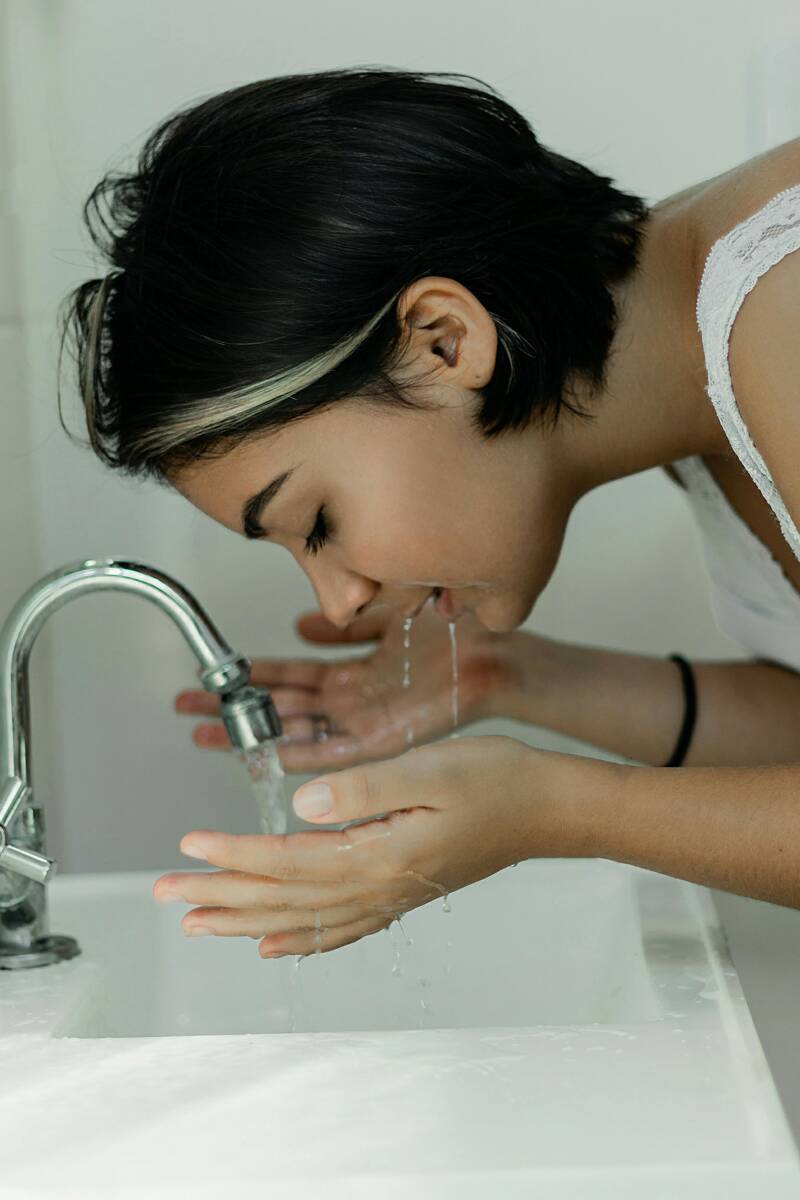
Actors Cameron Diaz and Selma Hayek say they never wash their faces. But their unusual approach to skincare isn’t as disgusting as you might think…
According to traditional skin care advice, you should wash your face every day – and sometimes twice a day to avoid the likes of acne and greasy skin.
But washing your face every day could do more harm than good, according to one leading dermatologist.
Dr Eva Melegh says washing your face isn’t necessarily the key to clear, calm and glowing skin. Here’s why…
Washing your face does not reduce greasiness
Sebum is an oily, waxy substance produced by your body’s sebaceous glands.
It coats, moisturises, and protects your skin. We need sebum for healthy skin.
People who suffer from acne often produce higher levels of sebum.
This can be due to genetics and hormonal disruptions such as puberty, pregnancy or menopause.
Stress can also increase sebum production.
Washing your face more often with detergents and solvents, which are often present in facial washes and cleansers for greasy skin, removes the natural oils from the skin’s surface.
This leaves the skin drier and likely to produce even MORE sebum to compensate.
Facial cleansing with a non-comedogenic facial cleansing oil followed by gentle exfoliation once every 1-2 days is better than washing daily with facial washes aimed at dissolving grease.
Washing your face does not stop spots forming
It’s a misconception that excess sebum causes acne. It doesn’t.
Therefore, washing your face daily to reduce sebum is not going to target the root cause of acne.
It’s the oxidisation of sebum when it nears the skin’s surface and mixes with air and external bacteria that can cause the sebum to go ‘rancid’ and pool in the skin’s pores.
This, in turn, causes blockages and inflammation that leads to pimples and acne.
The key to reducing acne is keeping the sebum from oxidising, not simply trying to wash it away.
Products that are sebum ‘preservatives’ help keep the sebum from becoming contaminated as it passes out through the skin pore.
This keeps the skin protected and moisturised by the sebum without it getting oxidised and going rancid, which leads to pore blockages.
Incidentally, if sebum is left to flow freely and not being constantly washed away, the end result will be that gradually the body will regulate itself and start producing less.
The paradox is often that people with greasy skin and acne immediately start off by washing their skin more which, in turn, actually increases sebum production.
Cleaning skin using a gentle exfoliant once a day followed by a sebum purifying serum is a better way to control sebum production and help prevent pimples and acne from forming.
Washing your face can make red and inflamed skin worse
If you suffer from rosacea and sensitivity, washing your face with water can make the condition worse.
Water is a very caustic substance which contains chlorine. This alone can trigger skin flare ups if you have very sensitive skin that’s prone to rosacea.
The temperature difference of using either warm or cold water to wash your face can also trigger a rosacea skin flare up due to the vascular dilation of blood cells below the skin’s surface.
Water-free cleansing with a moisturising cream-cleanser for very sensitive skin is much more beneficial for skin prone to redness and rosacea than daily facial washing.
Washing your face can remove good bacteria making dry skin even drier
Like the stomach, our skin contains good and bad bacteria.
It’s the bad bacteria that can lead to inflammation and acne.
And it’s the good bacteria that protects and maintains the skin barrier, which is what keeps bad bacteria out and also locks in moisture and prevents dryness.
Most facial washes contain anti-bacterial agents aimed at killing off harmful bacteria.
But this bacterial ‘wipe out’ approach kills off good bacteria too.
This can lead to problems for all skin types, but especially skin prone to dryness and eczema.
The skin barrier is crucial for keeping skin moisturised and supple.
People who are prone to eczema often have a genetically compromised skin barrier function.
That’s why killing off the good skin bacteria that helps to repair a damaged or compromised skin barrier will only make matters worse.
If you suffer from dry skin, washing your face daily can lead to even more dryness.
The best way to clean skin prone to dryness and eczema while protecting the skin barrier is with an oil-based cleansing product or a water-free cream cleanser with moisturising agents.
Follow this up with a skin serum containing prebiotics to feed good skin bacteria.
Try to use it overnight when skin cell regeneration is most active.
Washing your face can make open pores worse
Open skin pores and blackheads can be caused by genetics or a lack of elasticity and collagen production in the skin itself.
Stripping away essential skin oils through daily facial washing can make the skin less elastic and leave pores more open.
It’s much better to gently exfoliate normal skin once every 2-3 days, or greasy skin every 1-2 days to clean out open skin pores.
Exfoliation speeds up skin cell regeneration, whereas facial washing with anti-bacterial washes dries out skin and reduces elasticity.
The best combination for open pores is exfoliation once every few days for normal to dry skin or once a day in the most affected areas for greasy skin.
Follow it up by daily toning with a gentle pore-reducing toner to remove surface dirt.
Add comment
Comments